

The Weekender
December 14 | Reminder: Demand doesn't always translate into higher prices

Last week was a stark reminder that demand doesn’t always translate into higher prices.
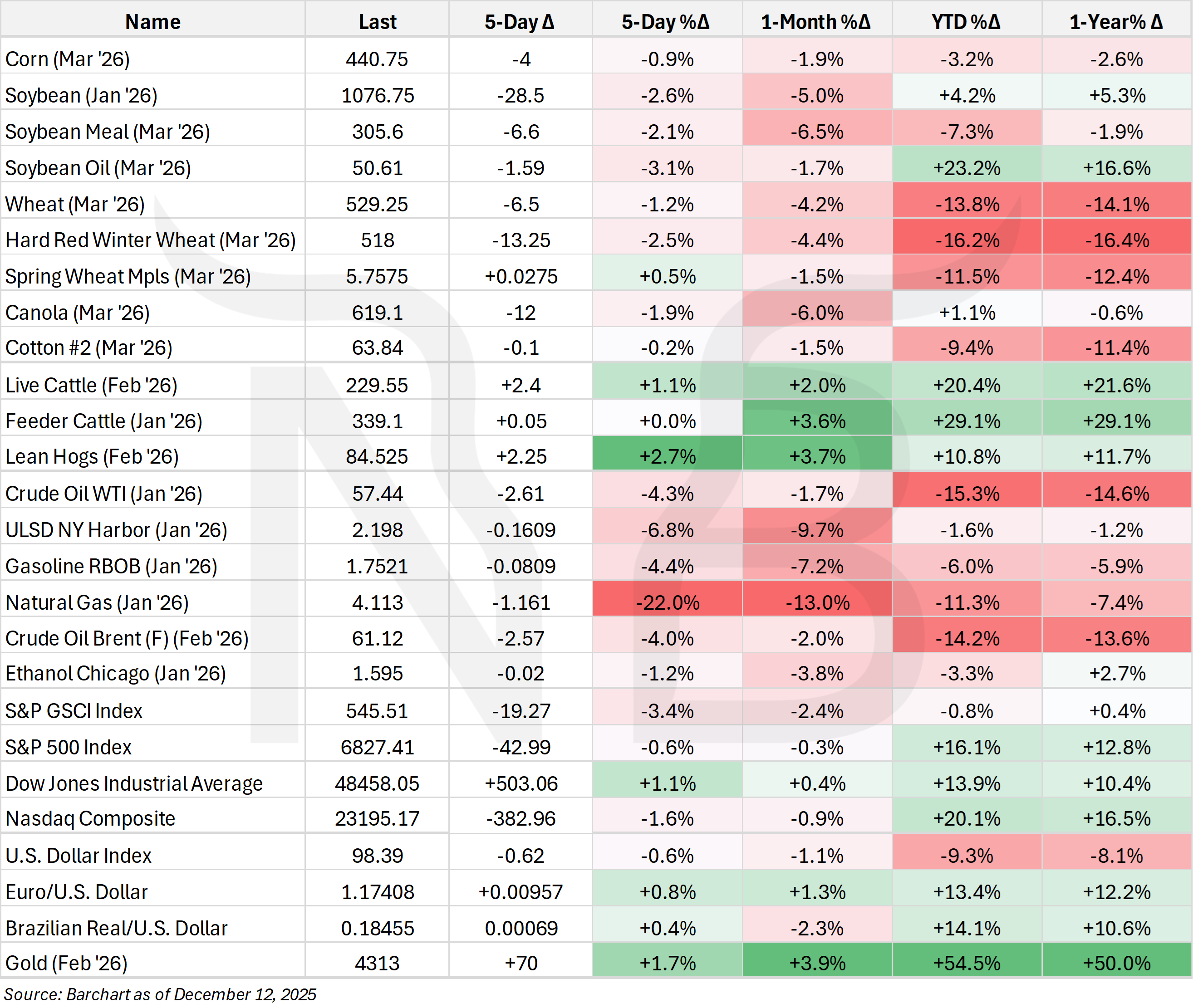
Despite renewed Chinese buying, beans slipped below $11 for the first time since the late-October U.S.–China “deal,” as a looming Brazilian harvest, benign weather, and a collapse energies pulled markets lower.
Weekly Winners & Losers
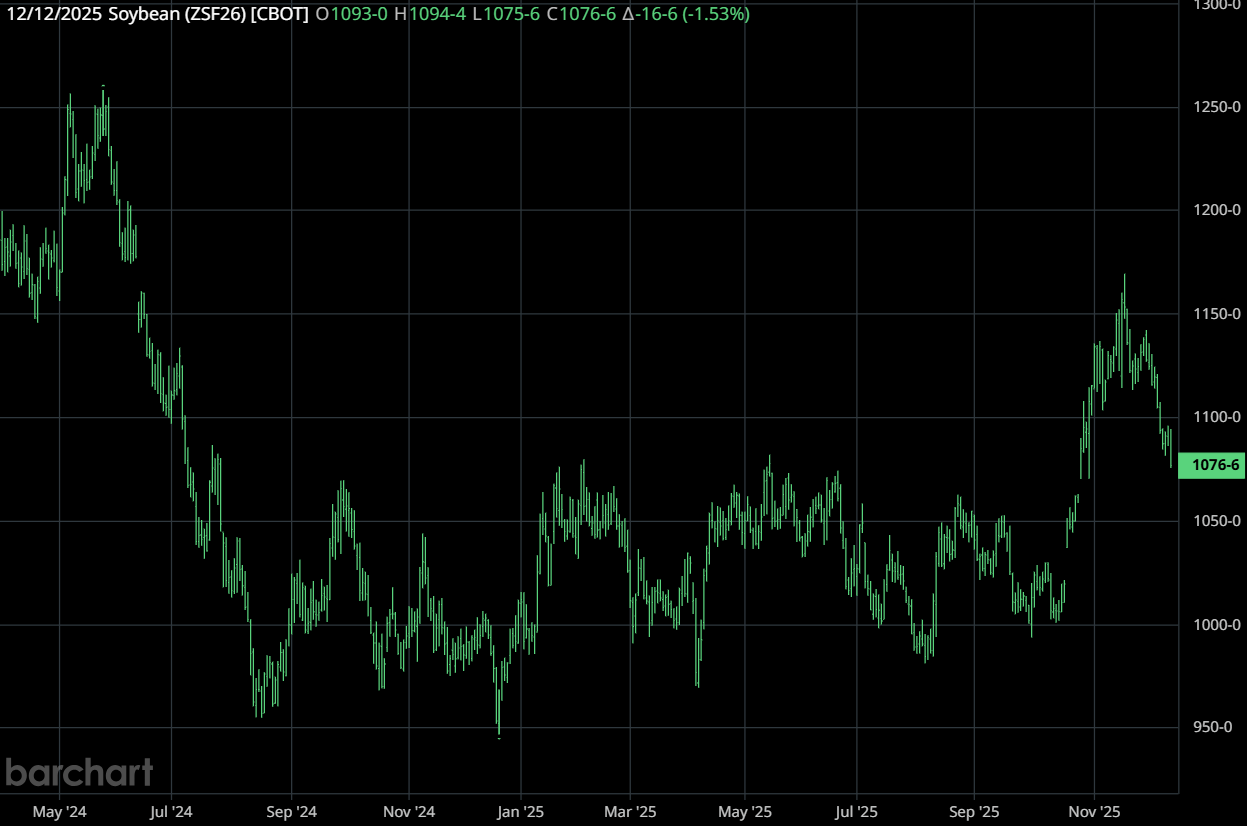
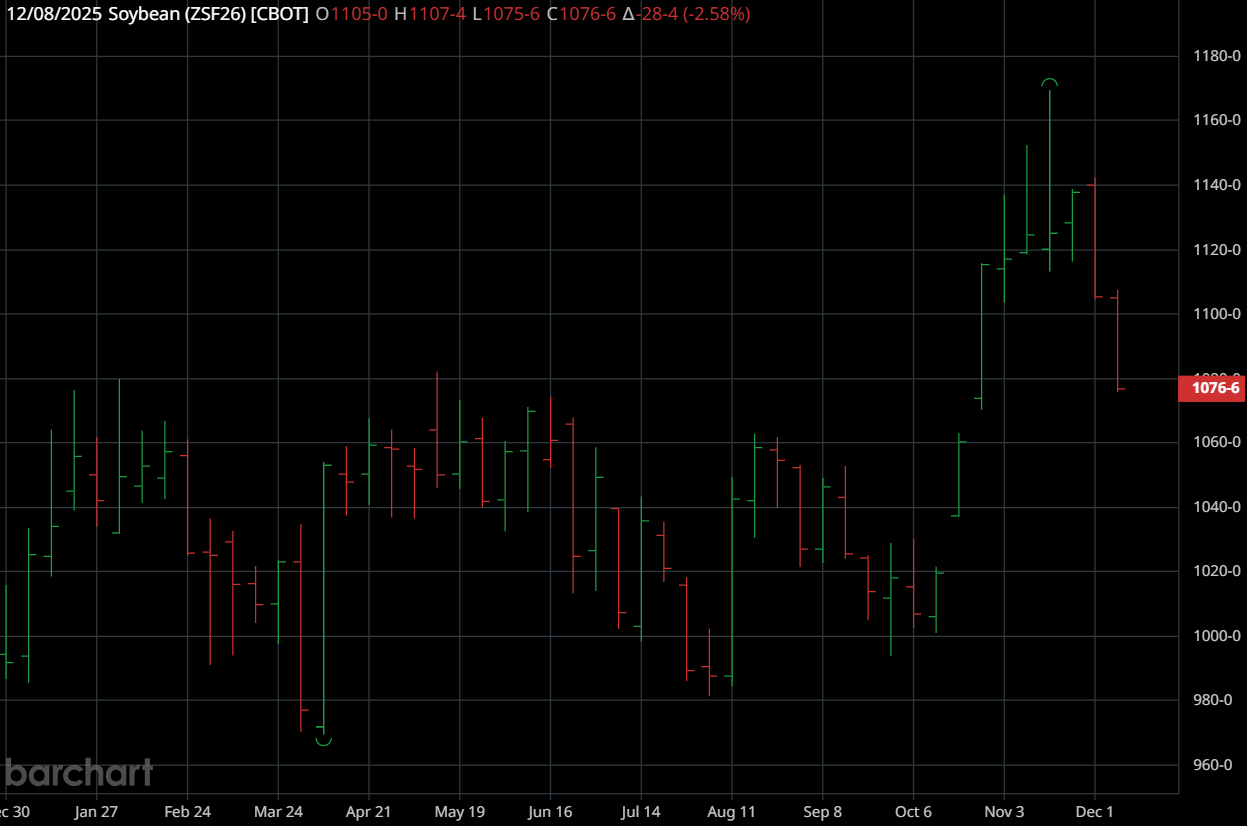
Since trading above 1160 for the first time since summer 2024 just over three weeks ago, soybeans have closed lower 11 of the past 18 sessions, losing more than 90 cents in that time.
Despite a resurgence in Chinese buying this past week, futures continue their grind lower, dropping below $11 for the first time since the U.S.–China “deal” on Oct. 30.
Cumulative Chinese purchases are now estimated north of 8 MMT (~300 mbu) toward Washington’s 12 MMT (~440 mbu) goal, with Sinograin booking multiple vessels per day at times — triggering three consecutive daily export flashes to end the week.
Even so, the fast-approaching harvest of another record Brazilian crop remains a headwind, with no meaningful South American weather threats and no clear policy timeline out of D.C., let alone a formal deal.
A slowdown in Chinese inquiries in U.S. markets on Friday, combined with benign South American weather, helped drive a 17-cent nosedive.
For the week, January soybeans fell 30 cents, bringing cumulative two-week losses to more than 60 cents — with Friday marking just the second consecutive weekly lower close since September.
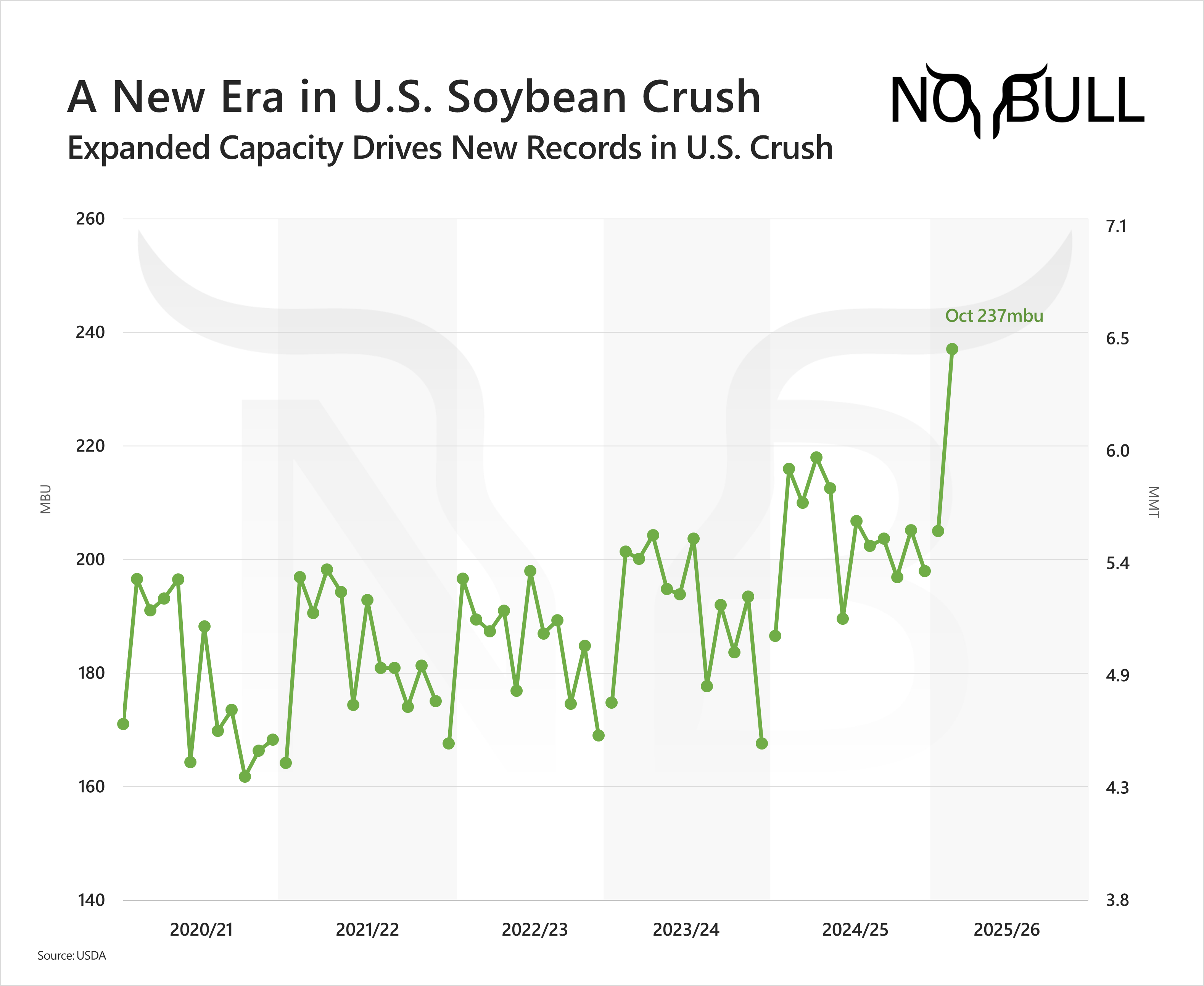
Mid-week, USDA caught up on delayed monthly crush data, confirming 2025/26 is off to another record start.
September crush hit a record 205 mbu, up 10% YoY. October was even more notable at 237 mbu — roughly 10% above the prior all-time monthly high — driven by new capacity and strong early-season meal demand as commercials refilled an empty pipeline.
That early demand reflected temporary market tightness as crushers worked to bridge old- to new-crop supplies, amplified by strong buying interest at relatively low prices.
Then, futures then rallied 20% during the final two weeks of October, quickly pricing U.S. meal out of the export market.
